
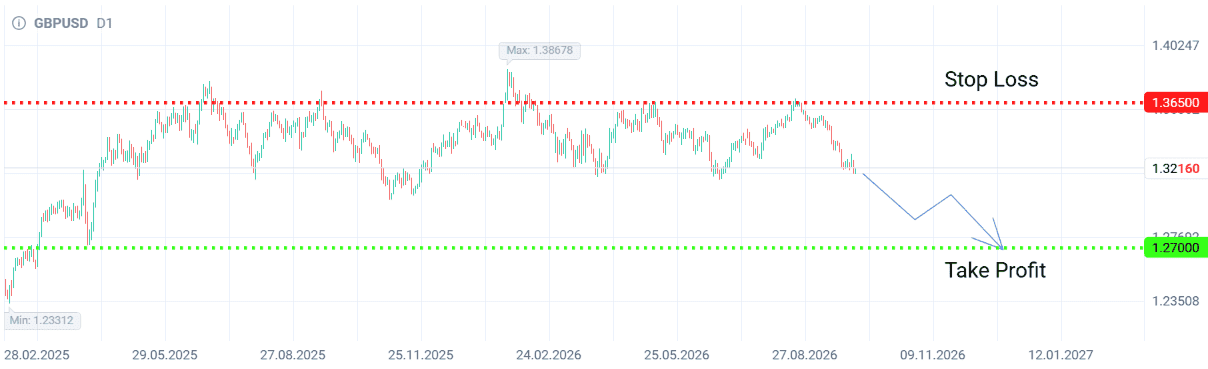
Currently, GBPUSD is trading at around 1.32150, still feeling the pressure after falling to three-month lows. During this period, the pair has actively explored the bottom. The fundamental picture continues to favor the US dollar. However, the UK economy is not ready to throw in the towel, posting solid results: GDP rose 0.5% in the second quarter (Q2), while the annual reading was revised upward to 1.4%.
The pound’s key struggle is soaring consumer prices. Last month, inflation expectations surged to 4.5%, up from August’s 3.9%. Long-term forecasts increased to 4.3%. At the same time, the Purchasing Managers’ Index (PMI) for September revealed a surge in production costs. What does this mean? The Bank of England (BoE) is likely to maintain its hawkish stance, as policymakers have little choice under the current circumstances. One might assume that monetary tightening should support sterling, but it is not that simple. Rising UK bond yields tend to put extra pressure on the government budget.
The American currency remains far stronger than its British counterpart. The dollar index (DXY) has recently climbed to a 1.5-year high, while returns on 10-year notes have jumped to 5.35%—a peak not seen since 2002. Elevated yields and steady demand for the greenback as a safe-haven asset keep supporting its performance, simultaneously pushing GBPUSD lower.
On the technical side, GBPUSD is now hovering around 1.32000—a level that has repeatedly proven to be solid support. However, given the current fundamental picture, this threshold may soon give way. If this happens, the next downside target could be 1.27000.
The final recommendation:
— Sell GBPUSD at the current price of 1.32150, aiming for 1.27000 within one month.
— For better risk management, place a Stop Loss order at 1.36500.