
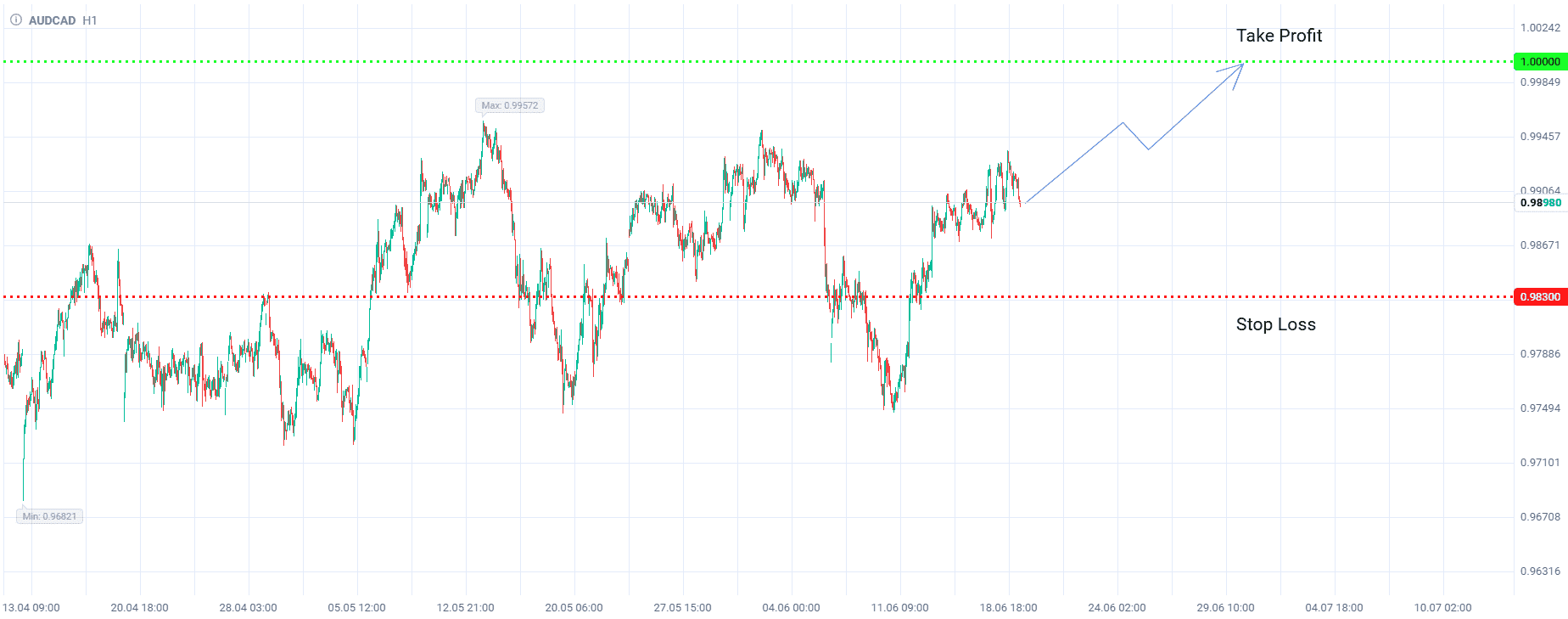
The AUDCAD pair is currently caught in a tug-of-war between two monetary authorities and volatile commodity markets, with oil prices playing a starring role in this process.
Down under, the Reserve Bank of Australia (RBA) is the main character. Interest rates are now parked at 4.35%, and the regulator has already jacked them up by 75 basis points at recent meetings in a bid to get inflation under control. Still, the domestic picture is flashing yellow: GDP growth slowed to just 0.3% in the first quarter, while unemployment ticked up to 4.5%—telltale signs that the economy is losing its grip.
North of the border, the loonie is licking its wounds. The Bank of Canada (BoC) has held rates steady at 2.25% for five consecutive meetings, insisting that energy-driven inflation isn’t a systemic threat yet. However, this argument is starting to unravel as oil prices have plummeted amid hopes of a US-Iranian breakthrough, which is a bitter pill for the Canadian dollar to swallow, given crude’s heavyweight status in the country’s export mix.
Taking a step back, the fundamental scorecard for AUDCAD looks fairly balanced, though the Aussie holds a slight edge, buoyed by a higher policy rate and a slightly less gloomy economic outlook.
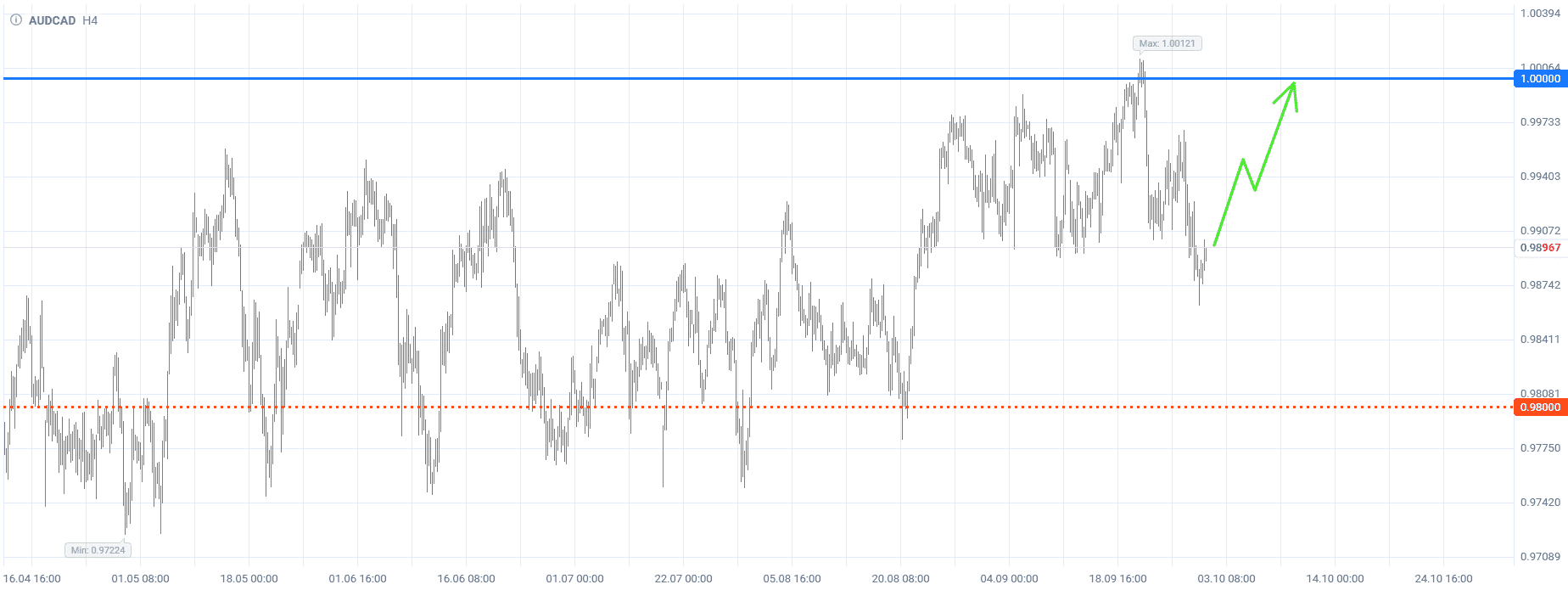
Now, let’s turn to the charts. The pair has been stuck in a flat, roughly between 0.97000 and 0.99500, for the past two and a half months. History suggests that extended consolidations like this often end with a bang: a breakout followed by a powerful directional move that can be as big as the width of the range itself. Right now, the odds seem tilted toward an upside run, with the first stop at the psychological parity level of 1.00000.
The final recommendation:
— Buy AUDCAD at the current price, targeting 1.00000 within one month.
— To shield your position from a downside move, place a Stop Loss just above the resistance level, at 0.98300.