
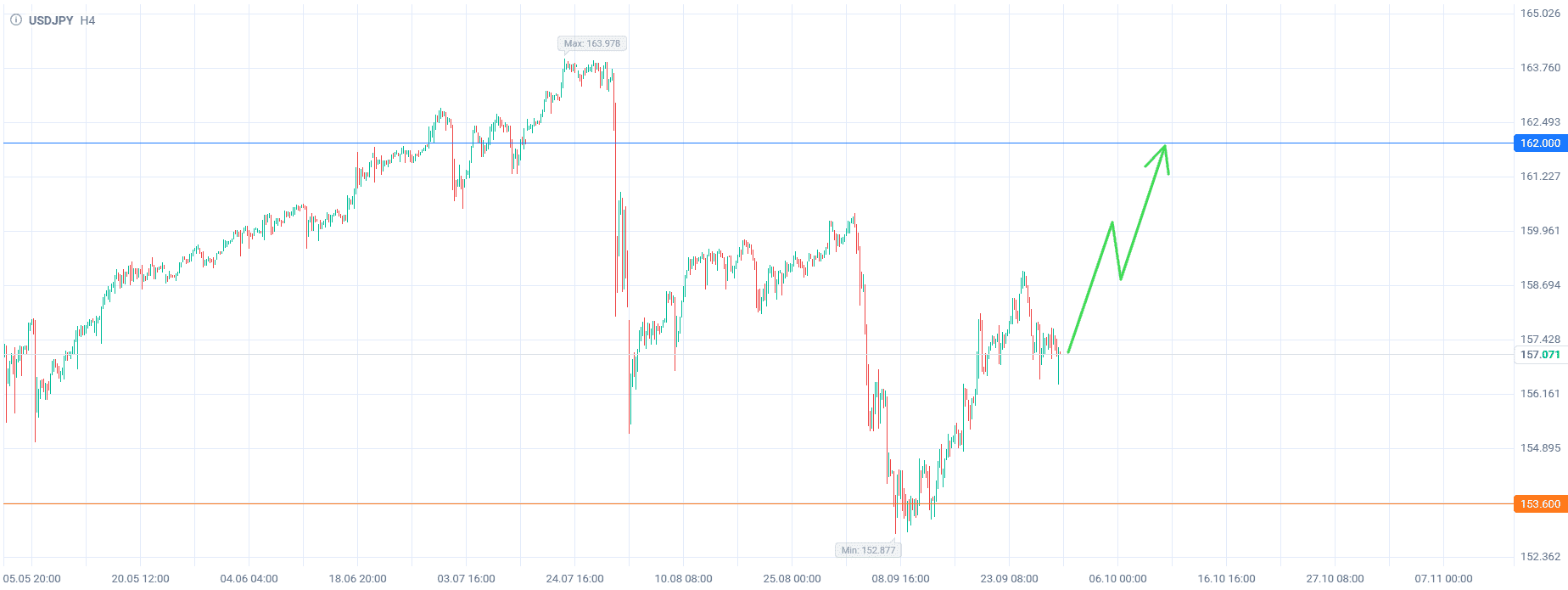
The USDJPY pair is on a one-way climb, and the engine behind it is the stubborn policy gap between the Federal Reserve (Fed) and the Bank of Japan (BoJ). Although Tokyo is talking tough about tightening, it is still out of sync with the global hiking cycle, which keeps the yen pinned down.
Across the Pacific, the American regulator isn’t blinking. With the economy humming along and the Producer Price Index (PPI) running hot, interest rates are staying above 4%. The plan is to hold them near 4.25% all the way through 2027. Meanwhile, 10‑year Treasury yields have punched up to multi‑year highs of around 5.25%, turning the dollar into a magnet for international market players.
Japan tells a very different story. Inflation is tame, and the core Consumer Price Index (CPI) has even slipped below the 2% target, leaving the BoJ with little room to maneuver. Big-name analysts see the central bank lifting rates to only 1.5%–1.75% by mid‑2027. This is nowhere near enough to compete with greenback yields, which is why carry trades—borrowing cheap yen to buy lucrative dollars—remain the flavor of the month. So, what’s the base case here? Investment firms are anticipating a moderately bullish scenario for the American currency over the medium term.
If US inflation flares up again and the Fed pulls the trigger on more hikes, expect USDJPY to blow past current highs and charge toward 162.00–165.00.
For the next 1–2 months, the pair should continue its uptrend. Any dips will likely be bought up quickly, as traders are eager to capitalize on the dollar’s persistent yield advantage.
The ultimate recommendation is to buy USDJPY. Place Take Profit at 162.00. Set Stop Loss at 153.00.
Calculate your open position so that a potential loss (protected by a Stop Loss order) is limited to 1% of your deposit. If your account balance does not allow you to enter a position of this size, it is better to skip the trade and wait for other market signals that meet low-risk criteria.